
How I became a Graphic Artist
From the workshop floor to the design studio.
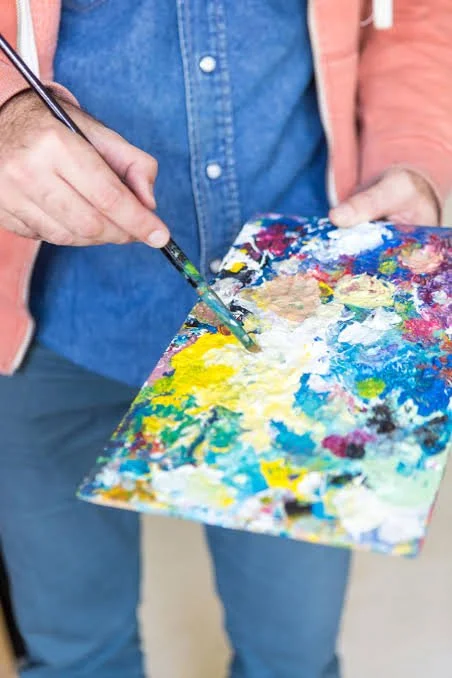
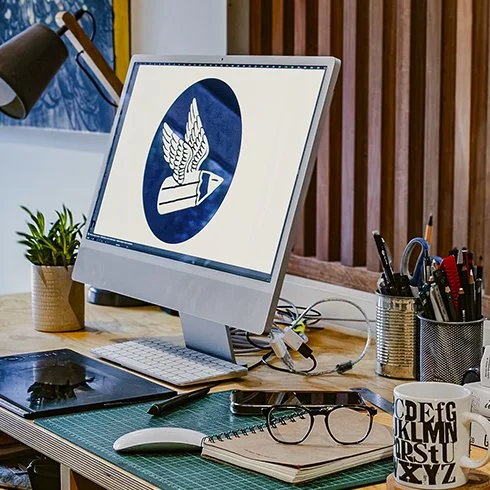

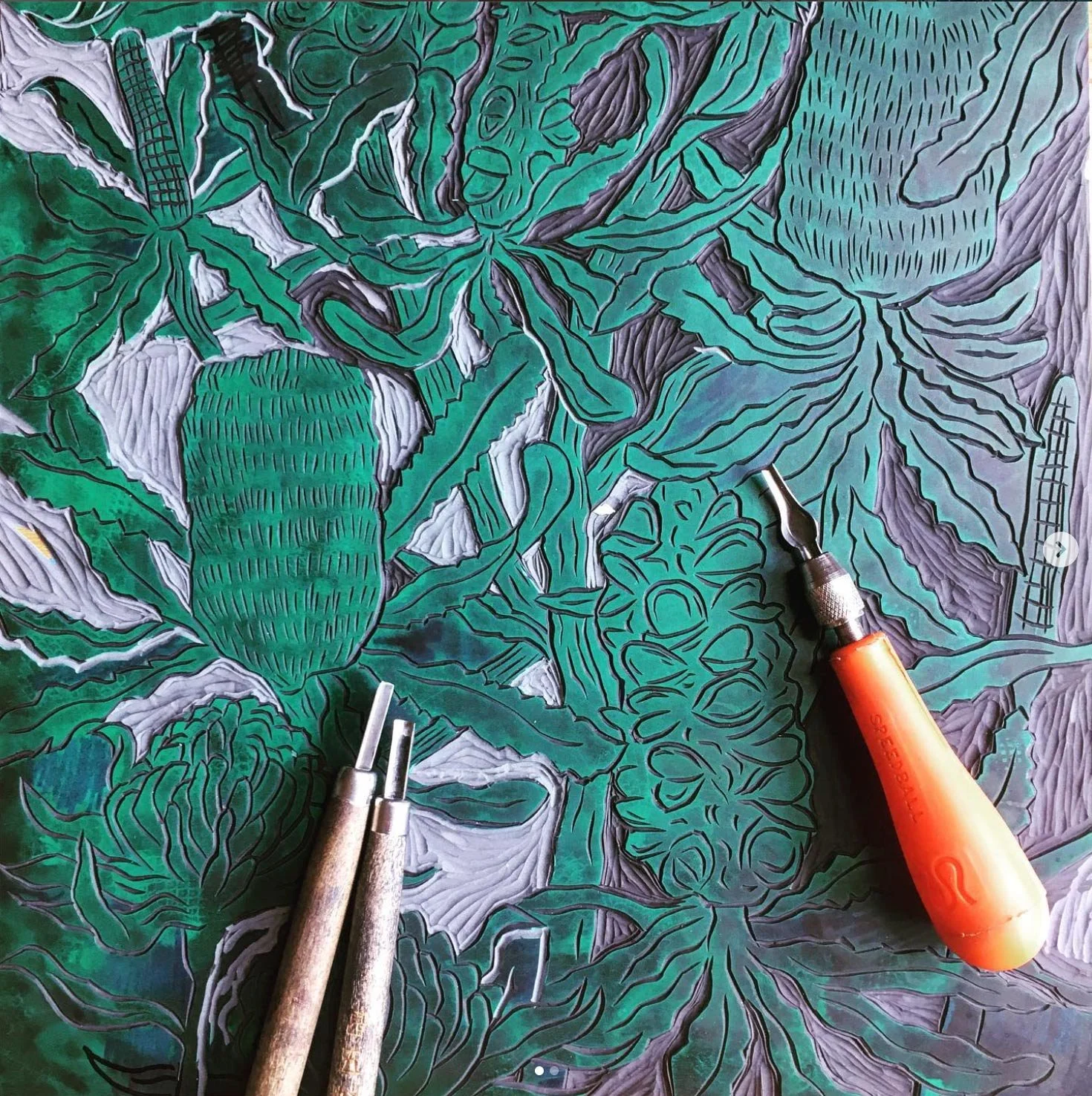
A Quick Overview
Experience: 25+ years as a professional commercial illustrator and graphic designer.
The Roots: Grew up in Geelong. Started with a 4-year traditional signwriting apprenticeship (the era of hand-painted lettering).
Education: Advanced Diploma in Graphic Design & Diploma in Visual Arts.
Artistic Style: A fluid blend of old-school craft (bespoke linocut prints, woodblocks) and new-world digital vector tools.
Interests: Bass player, indie music lover, and travel.
Based in: Melbourne, Australia; operating an independent studio working with global clients and local brands.
25+ Years of Lessons on Merging Analogue Craft, Industry Experience, and Creative Independence.
I prefer the title Graphic Artist: it reflects that I'm a hands-on practitioner bridging commercial design, illustration, and printmaking like linocut. While I work closely with client briefs, I maintain an active studio practice focused on self-initiated work. My real education didn't start in a university lecture hall; it started in the DIY indie music scene in Geelong, Victoria. As a kid, it was all about playing guitar and being in bands. I’d spend hours dissecting screen-printed gig posters and album covers, fascinated by how an image could capture the entire sonic vibe of a song.
Growing up near the coast, heritage surf brands like Rip Curl and Quiksilver were my first real introduction to the raw power of commercial logo design and high-impact apparel graphics. I wasn't just looking at the graphics; I was studying how they were built—the custom lettering, the limited colour palettes, and the emotional connection they made with an audience. This early obsession laid the groundwork for my career designing custom t-shirt artwork and streetwear apparel for global fashion labels today.
Survival Tip: Don't mistake a client’s technical feedback for a personal attack on your talent. A fine artist creates to express themselves; a commercial illustrator creates to solve a specific problem. When you learn to detach your self-worth, you'll save yourself years of stress, handle revisions with a smile, and build long-term relationships with clients who will respect your professionalism just as much as your portfolio.
Chapter 1: The Street, Surf Brands, and Indie Bands
The Lesson: Study what moves you before you ever study the software.
My real education didn't start in a lecture hall; it started in the DIY indie music scene in Geelong, Victoria. As a kid, it was all about playing guitar and being in bands. I’d spend hours dissecting screen-printed gig posters and album covers, fascinated by how an image could capture the entire sonic vibe of a song.
Growing up near the coast, heritage brands like Rip Curl and Quiksilver were my first real introduction to the raw power of commercial logo design. I wasn't just looking at the graphics; I was studying how they were built—the custom lettering, the limited colour palettes, and the emotional connection they made with an audience.
Survival Tip: Don't just browse Pinterest grids for inspiration. Look at the physical world around you; album art, vintage skate graphics, street posters, and analyse why they work and how they make people feel.
Chapter 2: Analogue Graphics (Working Without an "Undo" Button)
The Lesson: Tactile boundaries breed mechanical discipline.
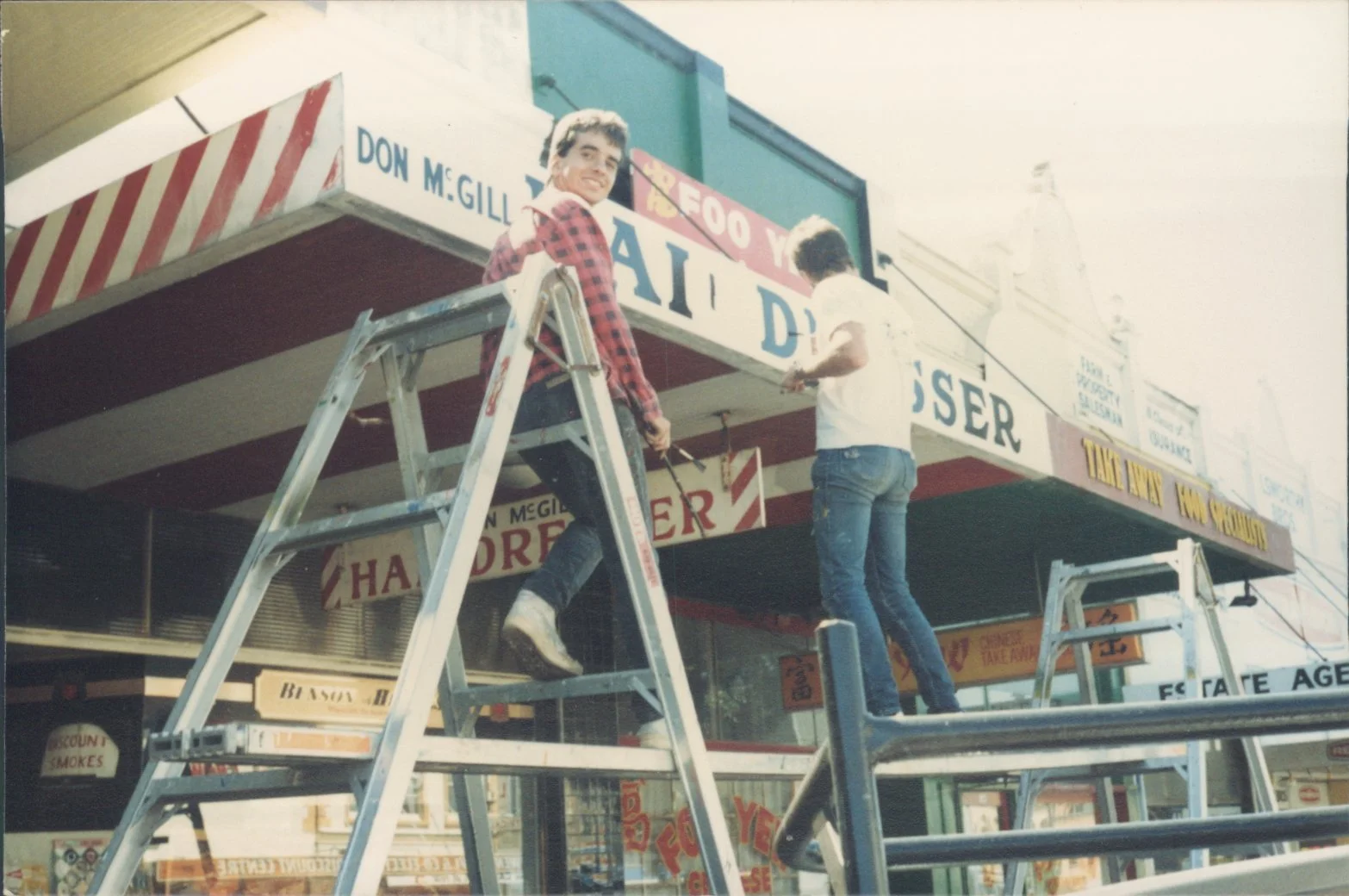
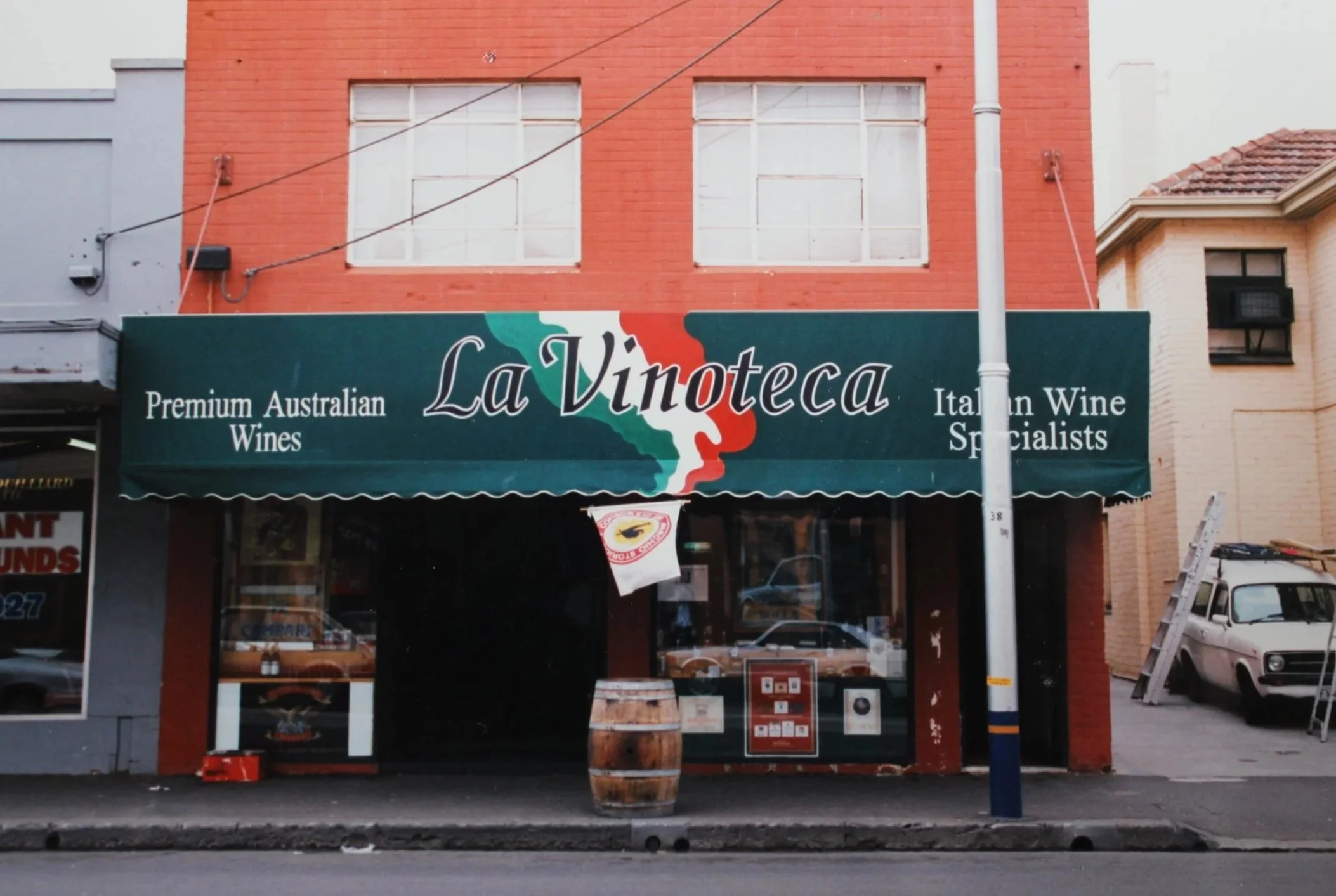
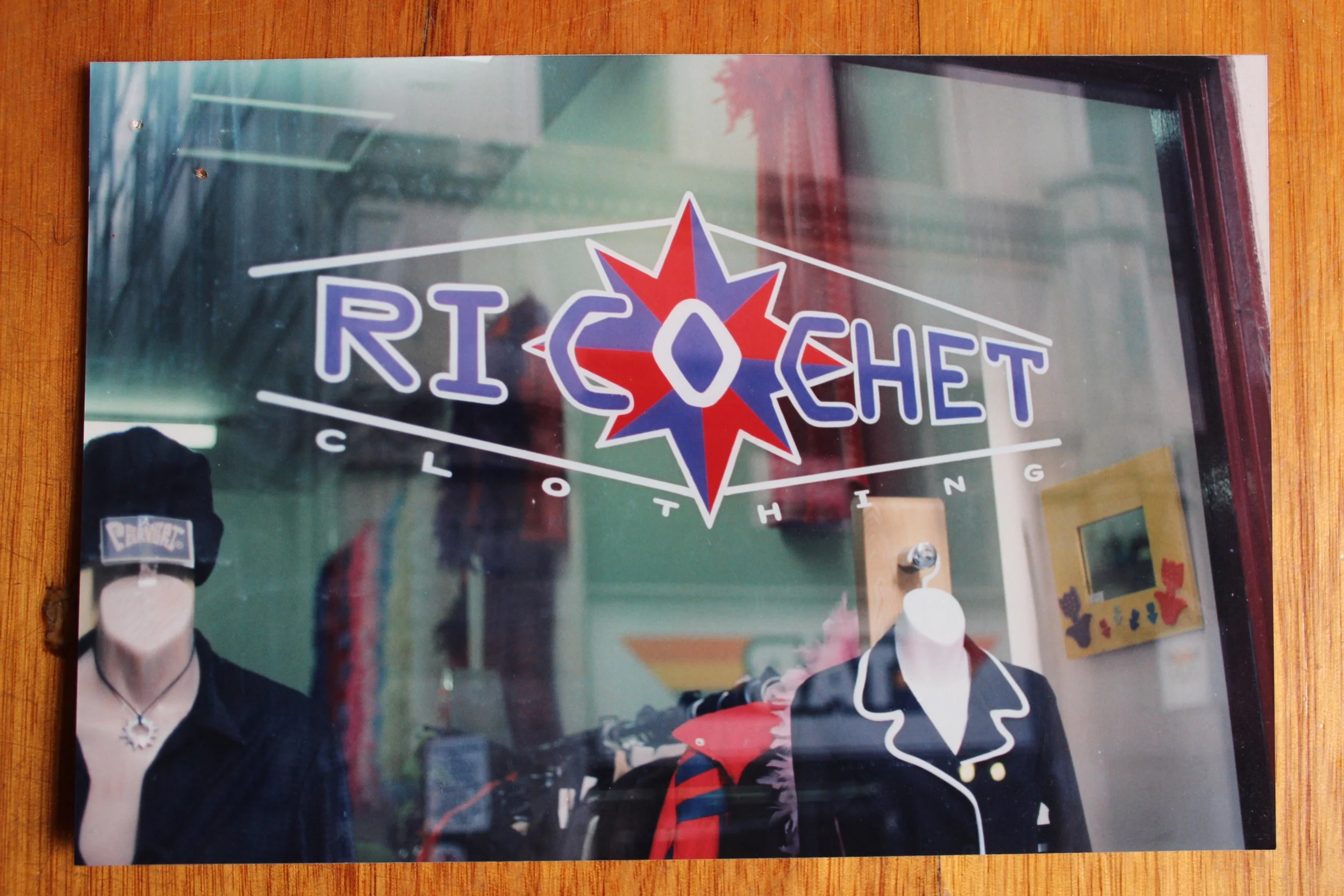
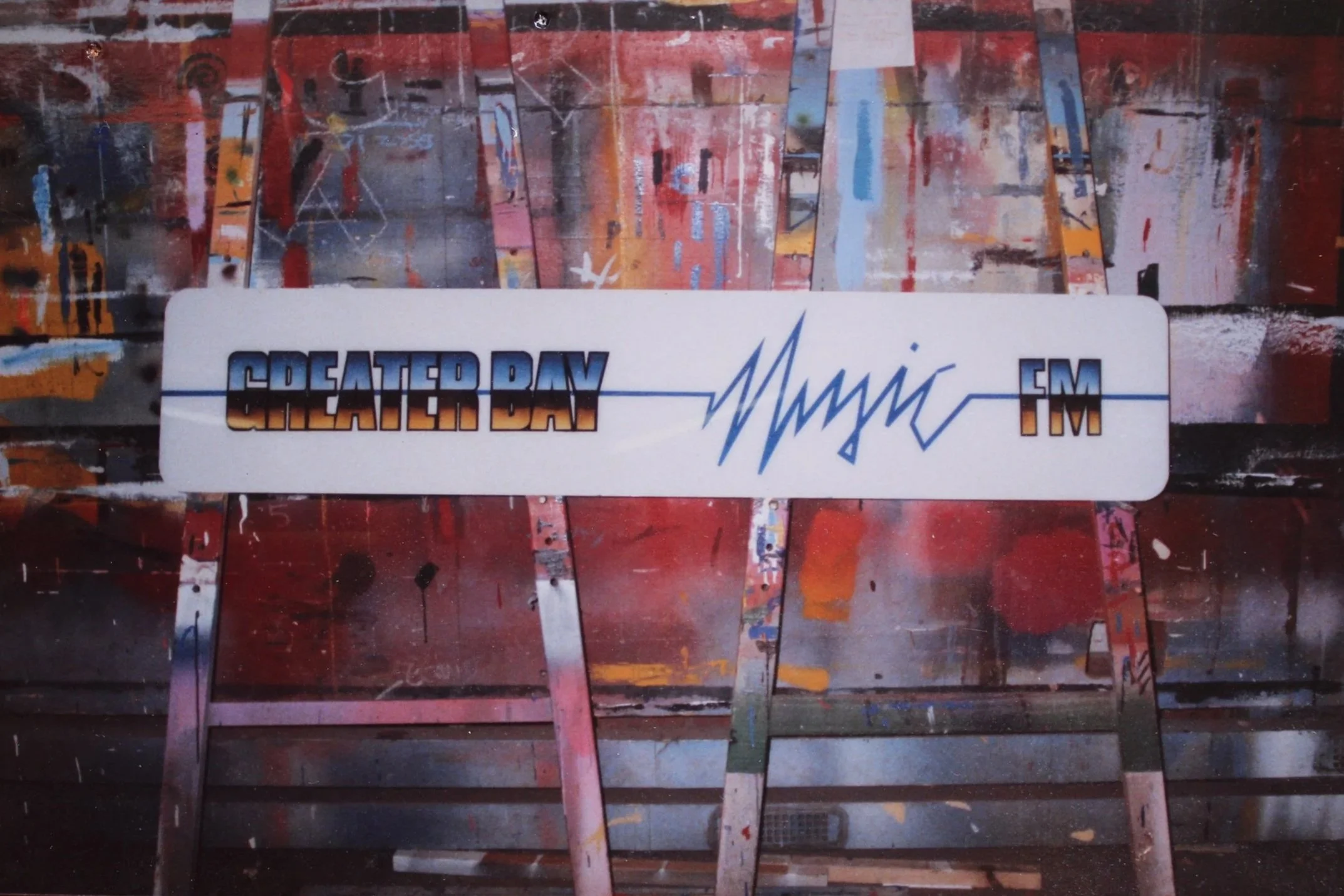
I was the kid constantly doodling logos in the margins of my school notebooks; frankly, it was the only place things made sense to my dyslexic brain. That early visual obsession eventually led me into a traditional four-year signwriting apprenticeship, immersing myself in the heritage trades of gold-leaf gilding, airbrushing, and pictorial brush painting.
In the days before design software or "undo" buttons, you learnt to build complex layouts stroke by stroke with enamel paint and a steady hand. Trade school was tough. The teachers were brutal old-school tradesmen, and it certainly wasn’t a place for anyone looking to be coddled as an "artist". It was strictly about creating perfect letterforms with a brush, executing fine linework, and mastering gold leaf on glass.
When I finally went out on my own as an independent signwriter, dealing with small business owners on tight budgets and painting signs in the middle of city traffic, I realised automation was rapidly taking over the industry. Hand-crafted, painted signage simply couldn't compete with the speed of computer-cut vinyl.
Yet, that intense foundation taught me everything. It gave me an innate understanding of spatial geometry, large-scale layouts, and structural problem-solving. Today, whether I am mapping out large-scale corporate office wall murals in Melbourne or developing custom house drawings and property illustrations, my entire process is guided by that same tactile, craft-based focus
Survival Tip: Master the foundational mechanics of your craft before you rely on technology to do the heavy lifting. Automation and AI can mimic styles, but they cannot replicate the deep spatial awareness, muscle memory, and structural problem-solving that comes from learning a trade from the ground up. When you know how to build a layout "stroke by stroke" in your head, your digital work will always have a weight, precision, and soul that software alone can never replicate. Do the hard yards early; they become your creative armour later.
Chapter 3: Travel, Perspective, and Academic Foundations
The Lesson: Absorb global culture, then master the technical tools to translate it.
After finishing my trade apprenticeship, I packed a bag and took off on a classic backpacking journey through the UK, Europe, and the Middle East. Travelling blew my world wide open. I returned to Australia with a fierce determination to turn this newfound creative spark into a high-level commercial career. To translate my analogue, hand-drawn ideas into production-ready digital assets that modern agencies would actually pay for, I committed to formalising my studies from the ground up.
It was during this intense academic chapter that I discovered the bold, graphic world of traditional printmaking while simultaneously conquering the design software required by modern graphic designers in Australia. My training became a deliberate three-tier foundation:
Gordon TAFE (Geelong) — Visual Arts: Re-grounding myself in core studio fundamentals, including life drawing, painting, and manual printmaking.
University of Ballarat — Advanced Diploma of Graphic Design: Mastering digital computer graphics, vector formatting, and layout software to cleanly translate my physical art into flawless digital deliverables.
Charles Sturt University — Bachelor of Arts Units: Studying advanced design theory, art history, and social history to ensure my commercial illustrations carried actual meaning, depth, and cultural intent.
Survival Tip: Don’t Just Collect Styles; Collect Context. A beautifully illustrated image is just wallpaper if it doesn't say anything. Technical skills are just the baseline; your real value as a creative partner lies in your perspective. Travel widely, read deeply, and study history. When you understand why certain visuals resonate culturally, you stop being a simple pixel-pusher and become a strategic problem-solver.
Chapter 4: Blending Old-School Roots with Modern Tech
The Lesson: Authenticity is your ultimate commercial differentiator.
Today, my studio practice operates as a fluid, continuous dialogue between old-school craft and new-world technology. As one of the experienced illustrators and graphic designers in Melbourne, I know that in a crowded freelance market flooded with generic, automated, and AI-generated assets, clients aren't just looking for a quick template. They want custom artwork that feels intentional, structurally sound, and profoundly real.
Whether I am designing a human-centred corporate report identity, hand-carving a raw block for a placebranding conservation project, or building a scalable system as a freelance infographic illustrator, the goal remains the same: bringing an analogue soul to a digital framework.
The secret to standing out to premium publishers, global fashion brands, and creative design agencies isn't choosing between the analogue past or the digital future. It’s mastering both. Merging hands-on artisan craftsmanship with flawless digital vector execution is how you create an irreplaceable, high-value visual voice.
Survival Tip: In a digital world, your physical imperfections are your highest-value assets. Never let software sanitise the soul out of your work. Let your lines retain their human weight, let your textures show the grit of the lino block, and let your layouts reflect real hand-eye coordination. When you can see the maker’s mark behind the pixel, the work becomes irresistible to premium clients.


Training & Affiliations
Advanced Diploma in Graphic Design & Diploma in Visual Art
4-Year Apprenticeship: Traditional Signwriting
Professional Memberships: Illustrators Australia, Australian Graphic Design Association
Outside the Studio
When I’m not designing, I like making music; writing, recording, and playing bass. To me, it’s all about creativity, whether I’m in a recording booth or at a printing press. Otherwise, you’ll find me on a road trip with my family, heading for a swim, or just getting outdoors.
Student & Community Resources - Q&A
For students: You are welcome to use text from my Q&A for assignments. If you have any questions, please contact me.
A Note on Work Experience: I often get asked about work experience, but because I operate as an independent studio, I don't have the capacity to provide the hands-on mentorship students deserve. While I can’t offer placements, please do explore the Student Q&A for industry advice and insights.
-
How did you first get into the industry?
My career began with a four-year apprenticeship at a signwriting company during the era of hand-painted lettering. After spending some time travelling, I formally studied graphic design at art college, which led to my first agency role. Parallel to this, I was heavily involved in the local music scene, designing posters for the indie bands I played in—a passion sparked by a lifelong obsession with album artwork and iconic band logos.
Where are you based now, and who do you work for?
I am currently based in Melbourne, Australia. As a freelancer, I work from my home studio with a diverse range of clients across Australia and internationally, including commercial businesses, independent writers, and various not-for-profit organisations.
What is your personal background, and what role did it play in your career?
I grew up in Geelong, a regional city about an hour’s drive from Melbourne. My real education didn't start in a lecture hall; it started in the DIY indie music scene. As a kid, I spent my time playing guitar and being in bands, where I’d spend hours dissecting screen-printed gig posters and album covers, fascinated by how an image could capture the entire vibe of a song.
Growing up near the coast, brands like Rip Curl and Quiksilver were my first real introduction to the power of a logo. I wasn't just looking at the graphics; I was studying how they were made—the lettering, the colours, and the way they made me feel. Because dyslexia made traditional schooling a challenge, I gravitated toward this more tactile, visual path. This led me to a hands-on signwriting apprenticeship, followed by formal studies in fine art and design. That foundation of "learning by doing" remains the backbone of my creative process today.
If you weren’t in your current industry, what would you be doing?
It would undoubtedly be something in the creative industry. I don't think I’m built for anything else! Whether through music or another form of visual art, I’ll always need a medium to translate what I’m seeing and hearing into something tangible.
Can you explain your creative process? What makes it unique?
For commissions, I start by listening to the client to understand their needs. I research, brainstorm, and use mood boards, often visualising ideas before putting pen to paper. I mainly use Adobe Photoshop and Illustrator, but what makes my process unique is blending this digital work with hand drawings or linocut prints for a bespoke look. I define myself as a "graphic artist" because my practice encompasses illustration, printmaking, design, and original artwork.
How would you describe your style?
I don't adhere to a single style because I prefer to experiment and try diverse approaches. I don’t want to be creatively restricted. However, if I had to define a core aesthetic, I would focus on simplicity, valuing imperfection and detail. My work often combines lines, textures, and tones, blending representation and abstraction. For recent projects, such as illustrations for Frankenstein, I’ve been using a pencil and ink-style, drawing on my linocut experience to emphasise contrast and shadows.
Which individuals do you gain inspiration from? Do you have any heroes in the industry?
I draw inspiration from several artists. I love the illustration work of Shaun Tan for his surreal, dreamlike imagery and his mastery across different mediums. I also admire the late American illustrator and artist, Lynd Ward; I've studied his iconic woodcut prints to learn his approach to handling light and darkness. Finally, the work of Australian printmaker Margaret Preston is a key influence on my linocut practice.
What tips would you give to aspiring creatives looking for work?
If you don’t have enough work in your folio, create your own projects to show what you can do.
What tips would you give to other professionals to get more clients?
The same as above. It’s all about your portfolio.
Can you share a memorable experience from your career journey that shaped your approach to creativity?
Discovering linocut printmaking was a key, foundational moment. For me, it's the perfect blend of illustration, graphics, and craft. The process of creating handcrafted linocut and woodcut prints provides a meditative escape from the modern pace, ensuring I maintain a connection to working with my hands and keep my practice creative.
What kind of tools/kit/software could you not do without?
Wacom tablet, Adobe Photoshop and Illustrator, pen and paper, and lino carving tools.
What’s your secret to staying inspired and motivated?
I always strive to improve because achieving complete satisfaction feels unattainable. I stay motivated by balancing commercial design with my own personal art, which is where I express myself and explore new ideas.
What’s the work achievement you’re most proud of?
I’m proud of the design and illustration work I did for Frankenstein
As someone with experience in the industry, what trends do you foresee shaping the future of creativity?
Maybe there will be a move towards more handmade and drawn work as a reaction to AI, and less photorealism.
What do you think sets apart truly exceptional creatives from the rest of the pack?
Innovative ideas, extensive hands-on experience, strong interpersonal skills, and technical nous.
How do you think technology has influenced the creative industries and how have you adapted to these changes?
I am old enough to remember the beginning of computers in graphic art, and I have adapted by actively embracing digital tools like Photoshop and Illustrator, which have democratised production. My grounding in physical art informs my process, as I blend hand-drawn and printmaking elements into my digital work for an authentic touch.
What is the one thing that you would change about the industry?
Governments need to act now to create laws that protect the copyright of artists, authors, and musicians from AI to ensure they receive fair recognition and compensation for their work.
Any websites, books or resources you would recommend?
I listen to lots of podcasts while I’m working, such as: The Illustration Department and The Good Ship Illustration.
Creative Pool: https://creativepool.com/magazine/
-
Q1: What led you to become an artist, and what drives your current practice?
My path wasn't a straight line through a lecture hall; it was a slow build from the ground up. I was the kid who spent more time obsessing over the shape of letters in my notebook than taking notes—partly because my dyslexia made art the only place where things truly clicked.
This obsession led me to a four-year apprenticeship in traditional signwriting. That "old-school" foundation—working with enamel paint, brushes, and no "undo" button—taught me the patience and "maker's mark" that still drives me today. Now, as a designer and illustrator, I move between paintbrushes and pixels. Whether it’s a commercial brief or a personal linocut, I’m driven by a search for "human resonance"—that bit of character and soul that only comes from creating something from scratch.
Q2: Who have been your most significant creative influences, and how have they shaped your artistic vision?
My influences are a mix of the street and the studio. Growing up in Geelong, Victoria, and near the coast, I was fascinated by the graphic power of surf brands like Rip Curl and Quiksilver. In the DIY indie music scene in Geelong, I spent hours dissecting album covers, amazed at how a single image could capture the vibe of a song.
On the finer art side, the woodcuts of Lynd Ward and the bold, graphic linocuts of Margaret Preston and Barbara Hanrahan have been huge. I’m also deeply influenced by the "Head, Heart, and Hands" philosophy from my studies in Steiner education—it keeps me focused on making sure my digital work never loses its personal, tactile feel.
Q3: How does nature and your environment inspire your work?
Having grown up near the beach and spending a lot of time on road trips, the textures of the natural world are my reset button. I’m not looking for "perfect" nature; I’m looking for the character in the imperfections of the Australian landscape—for beauty in the weathered and the real. I want my work to feel like it has a bit of ink under its fingernails.
Q4: Do you intend to communicate specific meanings in your work, or are you primarily focused on exploring creative issues?
I’m looking for authenticity. My goal is to move past just making a "pretty picture" and create something that feels intentional. In my linocuts, I’m often advocating for a slower pace of life—the kind of quiet focus I first learned while painting letters by hand in a workshop.
Q5: Could you provide details about your early life and geographic background?
I'm originally from Geelong. I grew up there, did my trade apprenticeship, and went to art college there before eventually heading overseas to travel and then settling into the Melbourne creative scene. The regional, coastal energy of Geelong, Anglesea and the Great Ocean Road definitely shaped my aesthetic.
Q6: Please describe your upbringing and the initial spark for your interest in Art and Design.
I grew up in a typical Aussie suburb, but music was my way in. My dad’s love for the Beatles meant album covers were my first art galleries. I’d sketch guitars and try to "design" logos for bands I hadn't even started yet. Because school was a struggle with dyslexia, that moment a teacher praised my drawing was a massive inspiration.
Q7: Was there a particular experience or individual who influenced your decision to pursue Art and Design?
My cousin, who became an art teacher, was a huge spark, but honestly, the old-school signwriters I apprenticed under were just as influential. They showed me that art wasn't just a hobby; it was a craft, a trade, and a way of life that required a steady hand and a lot of grit.
Q8: Do you have a preferred form of Art and Design that you practice professionally or for personal enjoyment?
Linocut printmaking. It’s the perfect bridge between my signwriting roots and my design training—it requires the same "measure twice, cut once" discipline.
Q9: Could you outline your creative process for linocut prints, from conceptualisation to the final framed piece?
I start digitally—using Photoshop or Illustrator to refine the composition—but I’m always trying to emulate that "hand-carved" feel. Once the design is set, I transfer it to the lino block using an acrylic glaze. The carving is the "slow" part; it can take days of quiet focus. I still hand-print every block using a baren and a wooden spoon. There’s something about that physical resistance of the lino that keeps me connected to the work in a way a mouse and keyboard can’t.
Q10: What is the typical timeframe for creating a linocut and a limited edition of prints?
It’s a labour of love. Between my commercial design commissions, a single edition of 20 prints can easily take over 150 hours. You can’t rush the carving, and you certainly can’t rush the hand-printing if you want each piece to have its own unique "maker's mark".
Q11: Your linocut work is predominantly black and white. Could you explain this preference?
It goes back to my love for gig posters and album covers. There’s a raw, honest power in high contrast. I love the challenge of creating "colour" and depth using nothing but the tension between light and shadow.
Q12: Do you primarily work from primary observation or secondary references?
Almost always from my own photography. Whether I’m on a road trip or in nature, I’m constantly snapping textures, shapes, and lighting that I can later translate into a carving.
Q13: Do you utilise drawings or photographs to gather inspiration and develop ideas?
Photography is my sketchbook. It’s the fastest way for me to capture a "vibe" or a specific botanical detail that I can later stylise in the studio.
Q14: Do you aim for accurate representation in your subjects, or do you combine motifs and stylise your designs?
I lean towards stylisation. My background in graphic design means I’m always looking for the "iconic" version of a subject. I love the geometric rhythm of Art Deco and the flow of Art Nouveau—I try to mix those "ordered" styles with the organic, messy imperfections of the natural world.
Q15: Some of your linocut prints are quite large. What challenges does this present?
Size adds a big physical challenge. When you’re printing by hand, an A3 or larger print becomes a full-body workout! You have to be incredibly consistent with your pressure, or the whole edition is ruined.
Q16: Do you prefer working to a client brief when creating linocuts, or do you favour greater creative freedom?
I enjoy both. Commercial briefs are like a puzzle to solve—using my "pixels" skills to meet a goal. But the linocuts are where I get to go back to my "paint" roots and just explore what feels real to me. Both feed into each other; the discipline of the trade helps my art, and the freedom of the art keeps my design work fresh.
Find My Work On Other Platforms
While I work primarily through my independent Melbourne studio, you can also find my limited editions and find me for specific commissions on these platforms:
Bluethumb– Original wall art paintings and linocuts.
Book An Artist – Commissions for pencil house drawings and portraits
Creative Pool– Commercial portfolio of graphic design, illustration for global agencies and brands.
Behance– Creative portfolio, process journals, and featured design projects.
Reedsy– Book illustrator and designer directory
Redbubble– T-shirts and prints